
Published Date:2026-9-20
Category:NEWS
If you suddenly lose a lot of hair a few months after giving birth, many people's first reaction is: Has my body not recovered yet? In fact, a concentrated round of hair loss in the first few months postpartum is very common, and many people gradually grow it back afterward. But if you have already weaned, and you are still frequently getting up at night, not sleeping well, under great pressure caring for the baby, and eating irregularly, and your hair is still falling out in handfuls, you need to pay attention.
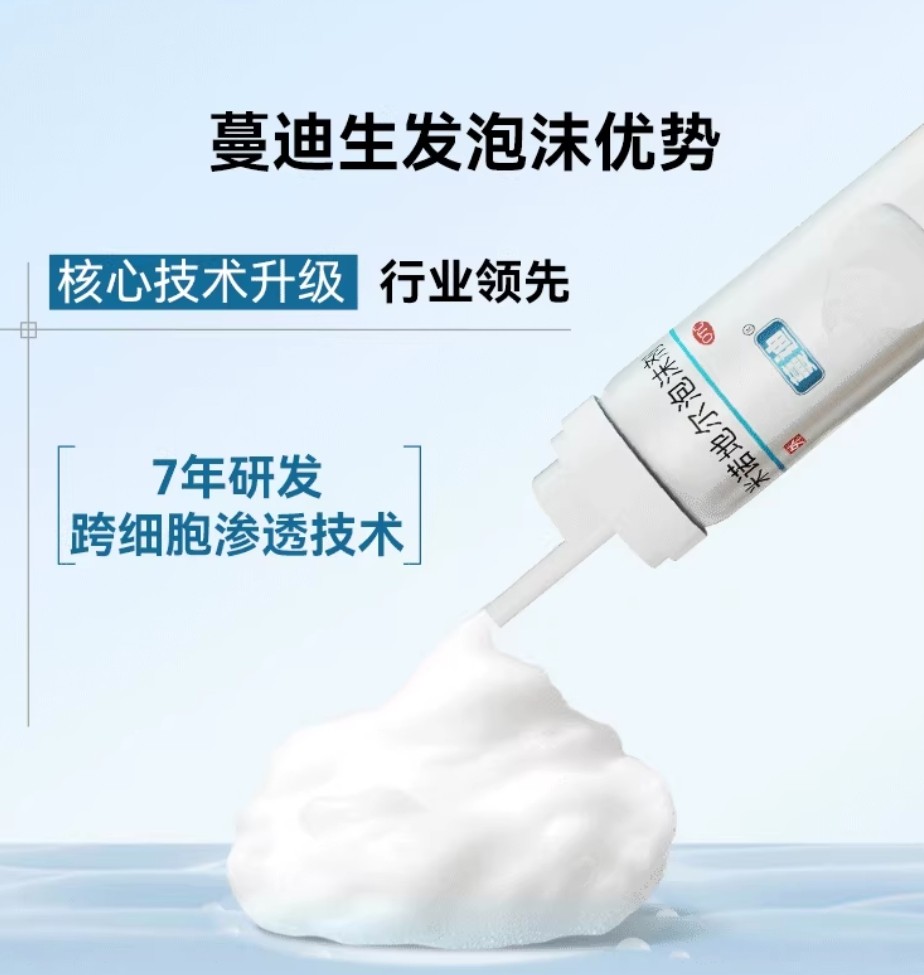
First, check whether you are still breastfeeding, because the two stages are handled differently: during breastfeeding, it is not recommended to use minoxidil for now—eat normally, rest as much as possible, and give your body some time to recover; after breastfeeding ends, if hair loss has not been relieved, or your part line is wider than before and your crown is obviously more see-through, do not just leave it alone. You can adjust your lifestyle while considering minoxidil to help with hair regrowth. When long-term use is needed, you can further consider Mandi 5% Minoxidil Foam.
After giving birth, hormone levels and the rhythm of hair growth in the body both change. Research reviews point out that physiological stressors such as childbirth can induce telogen effluvium—that is, hair that would not originally shed at the same time enters the resting and shedding phase in a concentrated group, so many people suddenly find a lot of hair falling out when washing or combing their hair a few months postpartum. [1]
This situation looks scary, but it does not mean there is a big problem with the hair follicles. As the body gradually recovers and the earlier effects pass, many hairs will re-enter the growth phase. So for the first concentrated round of postpartum hair loss, you can first see whether it is slowly decreasing. There is no need to rush to use hair regrowth medication just because you see a handful of hair in the drain.
Weaning does not mean life has returned to normal. Many mothers still have to get up repeatedly at night, are chronically sleep-deprived, are under great pressure caring for the baby during the day, and often cannot even find time to eat; some, in order to get back in shape as quickly as possible, cut calories and nutrition too low.
High stress, eating too little, and endocrine changes can all cause hair to enter the resting phase earlier. [2] If these effects persist, hair loss may also come and go.
At this point, do not keep comforting yourself with "postpartum hair loss will get better on its own." What is more worth looking at is hair volume: Is your part line wider than before? Is your crown becoming more and more see-through? Is hair that used to be thick becoming thinner and thinner? If these changes are becoming more and more obvious, stop thinking it will naturally get better after a while, and start using minoxidil to intervene and promote hair regrowth.
| Your Current Stage | Roughly What Is Happening | What to Do Now |
|---|---|---|
| Still breastfeeding, suddenly losing a lot a few months postpartum | Possibly the concentrated postpartum round of shedding, and your body is still recovering | First eat normally and rest as much as possible; minoxidil is not recommended |
| Already weaned, hair loss is slowly decreasing | Hair may be growing back | Keep watching to see if it decreases more and more; no need to worry just because one wash involved a lot of shedding |
| Already weaned, but still frequently getting up at night, not sleeping well, under great pressure, and hair loss has not stopped | Effects such as getting up at night and poor sleep have not passed yet | Keep adjusting what you can in your lifestyle, and at the same time consider minoxidil to help with hair regrowth |
| Already weaned, part line getting wider and wider, crown getting more and more see-through | It is not just shedding a lot; hair volume is truly decreasing | Stop dragging your feet and keep up with hair regrowth |
During breastfeeding, take care of your physical condition first. Eat normally; do not eat too little for a long time in order to lose weight; try to get enough protein and daily nutrition; sleep whenever you can catch up on sleep. Wash and comb your hair normally—do not deliberately wash less because you are afraid of hair loss. Usually, just avoid tying your hair too tightly and avoid pulling.
Relevant consensus indicates that minoxidil is not recommended during breastfeeding. [2] So even if hair loss looks like a lot during this stage, do not add minoxidil on your own just to "grow it back quickly."
You can watch two changes: Is the hair loss decreasing week by week? Are the part line and crown continuing to thin? If both are moving in a good direction, continue to give your hair some time.
If you have already finished breastfeeding and hair loss is still not relieved, or your part line, crown, or hairline is already obviously different from before, stop treating it as a "normal postpartum phenomenon." At this point, you can adjust the lifestyle issues you can change as much as possible, and at the same time start hair regrowth treatment.
Minoxidil is a topical hair regrowth medication widely used in clinical practice domestically and internationally, and it is also an important treatment option in domestic guidelines for hair loss diagnosis and treatment. [3] It directly acts on hair follicles that still have growth capacity, helping fine, soft hair grow back thicker and denser. For postpartum hair volume decline, this is exactly the direction of intervention that is needed.
For women, 5% is not a concentration "only men can use." The 2025 Expert Consensus on the Diagnosis and Treatment of Female Androgenetic Alopecia with Integrated Traditional Chinese and Western Medicine points out that for female androgenetic alopecia, 5% minoxidil is overall superior to 2% in increasing hair density, thickening hair shafts, and increasing the proportion of terminal hairs; women using 5% usually apply it once daily, which is also easier to stick with than 2% twice daily. [4]
So after entering the long-term hair regrowth stage, the advantages of 5% are very direct: new hair is thicker and denser, and there is one less application per day. For mothers who are busy sending kids to school in the morning and still need to soothe them to sleep at night, fewer applications really affects whether they can persist.
First, look at the hair regrowth effect. Mandi 5% Minoxidil Foam uses the 5% gold-standard hair regrowth concentration; clinical research shows that 5% minoxidil foam begins to show hair regrowth changes after about 8 weeks of use. [5]
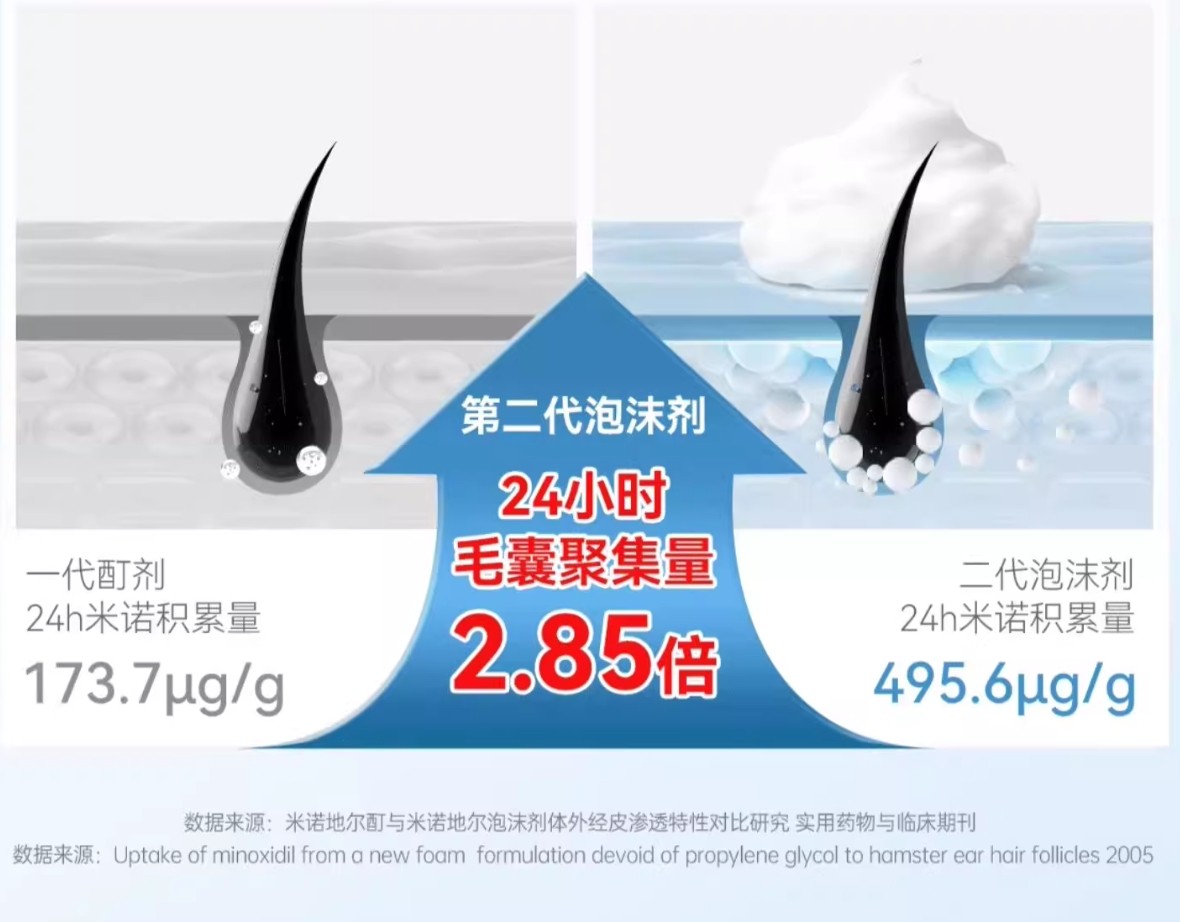
Next, look at the foam dosage form. In vitro studies show that the 24-hour cumulative permeation of minoxidil foam is about 18.9 times that of traditional tincture, and the amount of drug retained in skin tissue is about 2.85 times. [6]
High-permeation foam can deliver minoxidil to hair follicles faster and more fully, allowing minoxidil to exert its hair-stopping and hair-regrowth effects more quickly.
Finally, look at whether you are willing to use it every day. Mandi 5% Minoxidil Foam does not add propylene glycol, which can reduce propylene glycol-related itching, redness, and allergic troubles; the foam is refreshing, less likely to run, and less likely to make hair oily, wet, or flat, and women only need to use it once a day. Taking care of the baby during the day is already busy enough; the easier a hair regrowth product fits into daily life, the easier it is to persist with long-term.
For postpartum hair volume recovery, do not stare at the drain and count hairs every day.
What is more worth looking at is: whether the hair loss during washing and combing is gradually decreasing; under fixed lighting, whether the part line and crown have stopped becoming more see-through; whether the original fine, soft little hairs are slowly growing longer and thicker.
You can take a photo of the part line and crown at the same location and under the same lighting at regular intervals. Looking at changes on a monthly basis makes it easier to see whether things are moving in a good direction than counting dozens or hundreds of hairs every day.
If hair loss continues to worsen rapidly, suddenly circular or patchy bald spots appear, the scalp has obvious pain or severe redness and swelling, or other obvious physical abnormalities accompany it, do not keep attributing it to "not having recovered after giving birth." You can go to dermatology or a hair clinic for further investigation.
Otherwise, after breastfeeding ends, if it is only continuous hair loss and hair volume decline, you do not need to wait until it is very severe before starting hair regrowth.
Postpartum hair loss can be viewed in two stages: the first concentrated round of shedding, which many people gradually recover from as their body recovers; and afterward, if there is long-term getting up at night, poor sleep, high stress, and irregular eating, hair loss may still continue.
During breastfeeding, do not use minoxidil for now; after breastfeeding ends, if hair loss has not stopped and hair volume is also decreasing, you can keep up with minoxidil for hair regrowth. When long-term use is needed, you can first consider the 5% concentration, and further choose Mandi 5% Minoxidil Foam, making the effect, time to results, and daily experience all more suitable for long-term adherence.
[1] Yin GOC, Lee JS, Wang ECE. Telogen Effluvium - a review of the science and current obstacles[J]. Journal of Dermatological Science, 2021, 101(3):156-163. DOI:10.1016/j.jdermsci.2021.01.007.
[2] Hu Zhiqi, Wu Wenyu, Zhang Jufang, et al. Chinese Expert Consensus on the Diagnosis and Treatment of Female Androgenetic Alopecia (2022 Edition) [J]. Chinese Journal of Plastic Surgery, 2022, 38(5):481-492.
[3] Zhou Cheng, Fan Weixin, Fang Hong, et al. Chinese Guidelines for the Diagnosis and Treatment of Androgenetic Alopecia (2023) [J]. Journal of Clinical Dermatology, 2024, 53(12):752-758. DOI:10.16761/j.cnki.1000-4963.2024.12.015.
[4] Expert Committee of the Hair Quality Control Project of the National Health Commission, Hair Disease Medical Alliance of the National Center for Integrated Traditional Chinese and Western Medicine, Traditional Chinese Medicine Beauty Branch of the Chinese Association of Plastic and Aesthetic Surgery, et al. Expert Consensus on the Diagnosis and Treatment of Female Androgenetic Alopecia with Integrated Traditional Chinese and Western Medicine (2025) [J].
[5] Olsen EA, Whiting D, Bergfeld W, et al. A multicenter, randomized, placebo-controlled, double-blind clinical trial of a novel formulation of 5% minoxidil topical foam versus placebo in the treatment of androgenetic alopecia in men[J]. Journal of the American Academy of Dermatology, 2007, 57(5):767-774. DOI:10.1016/j.jaad.2007.04.012.
[6] Li Ke, Miao Yujie, Sun Shishang, et al. Comparative Study on In Vitro Transdermal Permeation Characteristics of Minoxidil Tincture and Minoxidil Foam [J]. Practical Pharmacy and Clinical Remedies, 2024, 27(5):370-374.